

Fisheries, nature conservation, renewable energies, shipping, tourism – our coasts are used in many ways. When planning and using coastal areas, however, the coordination of the many actors often fails, as some interests may conflict with each other. The project Baltic Sea2Land – Fostering integrated governance for the joint sustainable use of human and natural capital in the near shore zone, a follow-up project to the project Land-Sea-Act, in which the Baltic Environmental Forum Germany was also involved deals with the different interests and stakeholders that clash in coastal areas. To bring them together, we are developing a compass – a guide to action on how coastal space can be used efficiently and sensibly. This will serve as a tool for administrations and governments and will be tested in pilot regions.
INTERREG Baltic Sea2Land
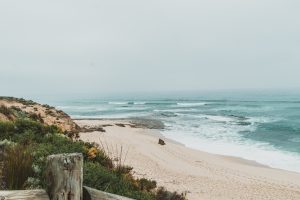
One pilot region we will be working closely with is the Island of Fehmarn. The municipality on the Baltic Sea Island with its approximately 13,000 inhabitants has set itself the goal of making the island climate-neutral by 2030. Fehmarn also wants to become energy self-sufficient and make the tourism sector more climate friendly. We are participating in this project and support the expansion of renewable energies on Fehmarn. To this end, we are drawing up a concrete plan that also considers possible obstacles such as NIMBY – the English acronym stands for not in my backyard, in Germany it is known as the Saint Florian principle. Together with the stakeholders, we develop concepts to overcome possible conflicts so that the regional energy supply is strengthened.
Project details
- Project name: Baltic Sea2Land
- Project management: Ministry of Environmental Protection and Regional Development of Latvia
- Subject areas: Energy and climate change, Water management and marine protection
- Funded by: INTERREG Baltic Sea Region
- Operational time: 01/2023 – 12/2025
- Project website: https://interreg-baltic.eu/project/balticsea2land/
Participating countries
Estonia, Finland, Germany, Latvia, Lithuania, Poland
The action is supported by the Interreg Baltic Sea Region Programme 2021-2027 – through the Subsidy contract for the project #C018 Baltic Sea2Land of Interreg Baltic Sea Region.