LIFE ChemBee: Ambassadors for the whole of Europe!

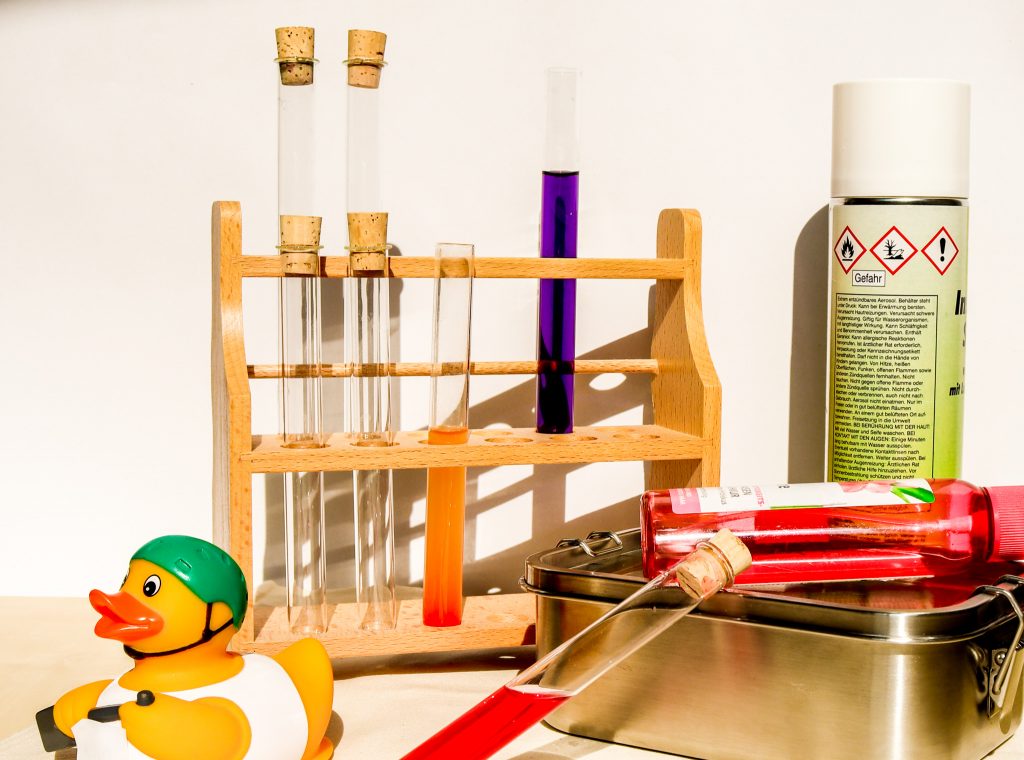
Hazardous chemicals are part of our everyday lives. They can be found in cosmetics, cleaning products, food packaging, furniture, textiles, toys and many other consumer products. Some of these substances can harm human health, others pose risks to the environment, and many affect both. At the same time, it is often difficult for consumers to identify hazardous substances and make informed choices when purchasing everyday products.

Through the European LIFE ChemBee project, BEF Germany and ten partner organisations from eight other European countries demonstrated that accessible information, practical tools and peer-to-peer education can empower consumers to reduce their exposure to hazardous chemicals in everyday life. The project’s objective was to enable people to make informed choices and to share their knowledge with others as Chemical Ambassadors, creating a multiplying effect within their own communities.

Chemical Ambassadors as Multipliers

At the heart of the project was the free Chemical Ambassador training programme. Over several weeks, participants gained scientific knowledge about hazardous chemicals in everyday products, their effects on human health and the environment, and practical ways to reduce chemical exposure in daily life.

The training followed a blended-learning approach, combining interactive online seminars with self-learning materials, videos, quizzes and practical weekly assignments hosted on the Moodle learning platform. A central element was the Household Chemical Check, originally developed within the predecessor project NonHazCity, which guided participants through a systematic assessment of hazardous chemicals in their own homes. After completing the training, Chemical Ambassadors were encouraged to support relatives, friends and other households in identifying hazardous products and adopting safer alternatives.

The programme also introduced and promoted the App Scan4Chem (later further developed as CheckED), originally created within the LIFE AskREACH project. The app enables consumers to obtain information about substances of very high concern (SVHCs) in products and supports more informed purchasing decisions.

Our Results at BEF Germany

Between autumn 2022 and early spring 2026, BEF Germany organised eight online training courses. The first three courses consisted of seven live online sessions each. In the later training rounds, the programme was further developed by introducing self-learning modules on topics such as „Living and Renovating“ and „Children and Other Risk Groups“. Additional follow-up sessions covered subjects including „Detox Your Garden“ and „How Your Chemical Detox Helps Protect the Climate“.

All live sessions were recorded and made permanently available together with extensive learning materials on the Moodle platform. In addition, BEF Germany organised three in-person training events in Hamburg. These meetings focused on networking, communication skills and coaching techniques, enabling participants to confidently support other households in reducing hazardous chemicals in everyday life.

Our recruitment campaigns combined social media, influencer collaborations, newsletters, public events, sustainability fairs and printed communication materials. Throughout the project, we continuously refined our recruitment strategy and expanded the communication channels that proved most successful.

BEF Germany at a Glance

  • 665 applications for the Chemical Ambassador training programme
  • 243 certified Chemical Ambassadors
  • 312,567 people reached through our recruitment and communication campaigns
  • 8 online training courses
  • 3 in-person training events in Hamburg
  • Around 100 social media posts published across our communication channels
  • Numerous information stands, workshops and interactive activities at sustainability fairs, neighbourhood festivals and public events

Results of the European LIFE ChemBee Project

Together with our project partners, we significantly exceeded the project’s original objectives. Between January 2023 and May 2026, the consortium implemented over 50 Europe-wide recruitment campaigns, combining social media communication, influencer collaborations, newsletters, university partnerships, sustainability fairs and a wide range of additional outreach activities.

The European Consortium at a Glance

    • 11 partner organisations from 9 European countries
    • 4,508,493 people reached through recruitment campaigns
    • 24,725 registrations for the Chemical Ambassador training programme
    • Several thousand certified Chemical Ambassadors trained across Europe
    • Tens of thousands of household chemical checks carried out throughout Europe
    • Development and publication of numerous guidance documents, educational materials, information brochures and scientific reports
    • Establishment of a European network of organisations, municipalities and committed multipliers promoting healthier and less toxic everyday living

The Legacy of LIFE ChemBee

LIFE ChemBee demonstrated that accessible knowledge, practical tools and peer-to-peer learning can empower consumers to make healthier and more sustainable choices. At the same time, the project highlighted that individual consumer behaviour alone cannot eliminate exposure to hazardous chemicals. Many exposure pathways are determined by product design, manufacturing and regulatory frameworks, requiring continued political action and stronger legislation.

The training programme, educational materials and digital tools developed within LIFE ChemBee remain freely available after the project’s completion. They continue to support municipalities, educational institutions, organisations and committed citizens across Europe in promoting healthier homes, informed consumer choices and a less toxic environment for future generations.

Project details

  • Project name: LIFE ChemBee
  • Project management: Baltic Enviromental Forum Germany
  • Subject area: Chemicals management
  • Funded by: The LIFE programme of the European Union
  • Duration: 10/2022 – 06/2026
  • Project website: https://thinkbefore.eu/en/life-chembee/

Participating countries

Austria, Czech Republic, Finland, France, Germany, Greece, Poland, Portugal, Sweden

Project employees

Project management at Baltic Environmental Forum Germany:

Other employees:

The project LIFEChemBee (No. LIFE21/GIE/DE/101074245) is co-funded by the European Union through the LIFE Programme. Views and opinions expressed are however those of the author(s) only and do not necessarily reflect those of the European Union or CINEA. Neither the European Union nor the granting authority can be held responsible for them.

YouTube

Mit dem Laden des Videos akzeptieren Sie die Datenschutzerklärung von YouTube.
Mehr erfahren

Video laden

Weitere Projekte

NUE-Stiftung: BINGO!

NUE-Stiftung: BINGO!Hot, greasy, toxic – hazardous chemicals and food contact materials Every day we ingest…

INTERREG HAZGONE

INTERREG HAZGONEHAZGONE equips public authorities, NGOs, and businesses in the Baltic Sea region with knowledge,…

INTERREG Baltic Sea2Land

INTERREG Baltic Sea2LandFisheries, nature conservation, renewable energies, shipping, tourism – our coasts are used in…
Cyclurban 2

Cyclurban

Cyclurban: Cycling as an element of urban climate change policyThe project „Cyclurban – Cycling as…